Pleasure as a Source of Nourishment
Pleasure as a Source of Nourishment
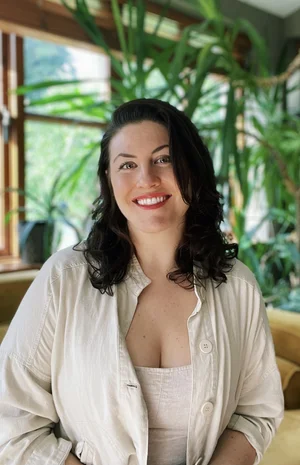
By Makia Mullen — Somatic Sexologist · Sexological Bodyworker · STREAM Pelvic Care · Sexual Wellness Specialist
Pleasure is not indulgent. It’s not excessive, frivolous, or something to be rationed out as a reward for our good behaviour. It is, at its most fundamental, our natural state, a compass that communicates with us when we are feeling safer in our bodies and when we are living in greater attunement with our inner rhythms. And yet most of us have spent years, sometimes decades or a lifetime, treating pleasure as though it’s a dessert… Something you earn or get to, eventually, once the hard part is done.
The hard part, of course, is never quite done so our pleasure will keep getting deferred. Kept JUST out of reach. And in the meantime, our body quietly starves.
One of my primary loves in life is opening folks to the conversation that our starvation from pleasure costs us, and what becomes possible when we begin to gently and with genuine curiosity, to feed ourselves again.
Our Body Was Built for This
Our nervous systems have dedicated pathways for pleasure. This isn’t some sort of evolutionary accident, but a load-bearing architecture. When we experience genuine pleasure, and I mean the real, felt, present-moment pleasures of life, our body releases cascades of chemistry that both soothe our stress response, lower our inflammation, regulate our heart rate, and shift our physiology into what we call the parasympathetic state. The rest-and-digest response, babes, THAT is where your body does its deepest repair work.
In the parasympathethic state, our cells regenerate more efficiently. Our digestion improves and our immune system has the resources to do its job more effectively. Our sleep deepens and chronic tension entire body, but especially in the jaw, the shoulders, the pelvis and belly begins to soften. And emotionally, we find that we have far more capacity to life’s twists and turns, more patience and more genuine presence with the people we love.
Our skin is our largest sensory organ, it’s designed to percieve and feel deeply. Our tongue detects extraordinary nuance and our belly responds to warmth and satisfaction. The brain releases cascades of delicious dopamine, oxytocin, and endorphins when we experience beauty, connection, touch, awe, and delight. We are, in the most literal biological sense, wired for satisfaction.
And yet, in our western culture utterly obsessed with detoxing, purifying, deprevation for the sake of optimising and restriction. Our pleasure is treated as something to be suspicious of. No doubt influenced by centuries of the puritanical conditioning, we've absorbed the message that our pleasure must be earned, justified, withheld or is just plain bad and wrong. That any indulgence is something to be rationed. Then even once we've "earned" it, many of us are so steeped in quiet shame that we don't allow ourselves to actually enjoy it or worse yet, punish ourselves for allowing pleasure.
We go through the motions while something in us stays braced, waiting for the other shoe to drop. These patterns of contraction, control, numbness, and disconnection are not character flaws, they’re signals that our body's doesn’t feel safe. Something is pulling me away from the vitality, ease, and connection that I am built for.
The Intimacy of Nourishment
We all eat. Regardless of our relationship to food, nourishment is a universal necessity and one that reflects our emotional and relational patterns in ways most of us have never been invited to examine. Eating is inherently communal. It connects us to the hands that sow, harvest, prepare, and serve our food. From the soils, seasons, cultures and ancestors who passed down the knowledge of what feeds our body and what feeds our soul. Our relationships with food, much like our relationships with intimacy can reveals our capacity for presence, connection, and embodied pleasure.
I know this territory personally. Like many millennial women who came of age through the particular madness of early 2000s, the heroin-chic and almond-mom culture. I found myself for years ensnared in the rigidity of disordered, hyper-controlled eating and orthorexia. Meticulously measuring every bite, striving for a certain body shape and obsessed with vitality and wellness. Anxious, stressed, chronically undernourished, inflamed, and yet convinced that the solution was yet another prolonged water fast, green juice detox, biohacking technique, overpriced superfood supplement or more intensive hours in the gym.
More control.
More restriction.
More iron will.
And then I encountered something different. A started to repair my relationship with food to one of reverence and replenishment. Food as ceremony, true nourishment as communion and a burgeoning reverence for the body as something worthy of being fed well, fed slowly, fed with genuine care. One of my early teachers, Naturopathic Doctor Farida Sharan, used to call food "a love note to our cells," and something in that phrase cracked me open when I first heard it.
My relationship with eating began to shift from control to genuine care. I started letting the juices of a ripe nectarines or mangoes run down my chin without wiping it away immediately. I baked sourdough for the first time after decades of anxious gluten avoidance and let myself actually eat it, warm, straight out of the oven with absurd amounts of golden grass-fed butter. Oh my god, it was gloriously and orgasmic. It felt as though my cells were literally dancing in ecstasy. I poured olive oil on veggies like I was about to run out on the global market and sucked succulent, pastured meats off the bones.
This was nourishment beyond macros and meal plans, it felt like a true invitation to take up space and let my body heal from decades of depleation. I allowed myself to luxuriate in every scent, sip, and savour and to suck from life's very marrow.
This was REAL pleasure embodied and it became the healing salve that restored not just my relationship with food, but my relationship with my body, senses, and pleasure itself.
Eating as an Erotic Act
Whether it's a slice of cold watermelon on a hot afternoon, a handful of Brazil nuts, homemade marshmallows toasted over a fire, or an elaborate seven-course feast shared with loved ones, the essence of nourishment lies in our ability to listen to our body and be present. Eating with awareness transforms even the simplest meals into acts of devotion.
It invites us into a fuller sensory experience, one that satisfies not just our hunger, but our deeper need for connection, aliveness, and genuine contact with our own bodies. This is true satiety, not just physical fullness, but a deep, cellular satisfaction. Pleasure as a vital nutrient.
And just like any form of intimate touch, receiving nourishment requires our openness. It asks for us a nervous system willing to surrender to ease, yeild into a felt sense of safety, and willingness to actually receive. When we are relaxed and present, we don't just digest food more effectively, we absorb life more fully. The parasympathetic state creates the ideal conditions for both deeper pleasure and deeper nourishment through a the visceral experience of a safe environment, slower pace, and deliberate sensory engagement. These aren’t luxuries, they’re physiological prerequisites for actually taking anything in. Which is why fast food, as a metaphor, is worth sitting with for a moment.
We live in a culture driven by speed and efficiency. Fast food, fast intimacy, fast everything.
The same shortcuts that diminish our relationship to food seep, almost inevitably into our erotic lives. We're conditioned to seek quick fixes instead of deep satisfaction. Grabbing for a snack in lieu of a meal and wondering why we're perpetually hungry. One of my favourite somatic sex educator and male pleasure muse, Court Vox says it so aptly and plainly… "We're not about Happy Meal sex. If you want fast food sex, it's out there. But if you want a five-star meal, sit down, take your time, and prepare to be fully present."
The same is true at the dining table, whether culinary or erotic, genuine nourishment requires slowness, curiosity, and the willingness to engage all of our senses.
We Metabolise More Than Food
Here is something worth sitting with, we metabolise more than food. We metabolise life through our senses, digesting experiences. We absorb emotion. Our fascia, skin, and nervous system are constantly perceiving, taking in and translating our experience of the world through sensation… through our felt senses. What we consume, nutritionally, emotionally, and energetically, literally becomes part of us. It shifts our internal biochemistry, generating the hormones and neurochemical cascades that shape our moods, desires, relational capacity, and our sense of vitality and aliveness.
This is why chronic stress does something very specific to our pleasure body. When your nervous system is in sustained low-grade emergency and for many people, it has been for years, it stops spending resources on pleasure. Our slightly outdated evolutionary hardware preceives pleasure is a luxury to a system that believes it's under threat. So our capacity for pleasure goes dormant under the weight of sustained stress, trauma or unresolved emotional uphevel.
Then there's the layers of our conditioning. Many of us grew up in environments where pleasure, particularly sensual or sexual pleasures were shrouded in shame, silence, or simply never discussed at all. These messages don't just live in the mind. They embed in our very tissues. They become our posture and breath patterns, they shape the way we move and hold our pelvis, the reflexive bracing before anything feels too good. Over time our body can learn to guard against pleasure the same way it guards against threat, because at some point, the two states became entangled and confused.
And for those of us who carry trauma (which is most of us) including the quiet, cumulative kind that doesn't look dramatic from the outside, the body itself can come to feel like an unsafe place to inhabit. In short, if our body doesn't feel safe, pleasure isn't fully possible. Our felt experience of oh, this is good requires a certain degree of surrender, and surrender requires safety.
This is why reclaiming pleasure is, at its core, a somatic practice. It begins in our body, not the mind.
Pelvic Health and the Geography of Pleasure
In my STREAM pelvic care work, I continually returnto the pelvis, not because it's the only place pleasure lives, but because it's the place where so much of what blocks pleasure tends to settle. Tension, unexpressed grief, old emotional residues, memories of experiences we never fully processed, these make their home in the deep pelvic muscles, the pelvic floor, the connective tissue of the hips and lower abdomen. And they sit there, constricting the flow of sensation and aliveness through our body.
One of the most consistent things I observe is that people have no idea how much tension they're holding here. It’s become their normal, their baseline, they've adapted around it so thoroughly that they no longer register it as tension. They just know that sex sometimes hurts, or that pleasure feels muted, or that they feel vaguely disconnected from their lower body. They know something is missing, but they can't quite locate it.
Pelvic care approached somatically, with care, consent and genuine curiosity begins to thaw these patterns of tension and restriction. As our tissues release, people often describe a returning sense of warmth and sensation to areas that had felt numb for years. Old emotions surface, not violently, but with the gentle insistence of something that’s finally been given the room to be felt and moved through. And gradually, the place between self and pleasure begins to open again. Not in an esoteric way, this is just what happens when a body that has been holding on for protection, survival, propriety and is finally given permission and support to let go.
Building a Pleasure Practice
The invitation here is to move away from pleasure as a destination, as something you arrive at, achieve, or wait for it to appear like an apparition. Pleasure is a practice, it’s something that we can build capacity for and cultivate a relationship with with continues to deepen, expand and enriches over time… the more you pour into it. Pleasure becomes something you show up for regularly, the way you would show up for anything you actually want to cultivate.
It much starts smaller than you'd think, with noticing and with a deliberately turning of our attention towards what feels good in our bodies RIGHT NOW. Even if what's available is subtle or almost imperceivable. The temperature of the air in the room, the light caresss of a breeze as you’re walking outside. The weight of your hands in your lap. The texutre of the clothes against your skin. The way your breath moves when you let it slow down. These are not trivial acts for a nervous system that has learned to live largely outside of the body, they are the first steps of coming back into contact with ourselves… and they are everything.
From there, we can slowly begin to expand.
You eat one meal a week slowly, without screens or background noise. Enjoying the flavours and savouring each bite.
You take a bath and stay in it long enough to actually feel your tissues soften.
You go for a walk with no destination or no podcast, just your body, moving through space, noticing your surroundings and registering what feels good about that.
You start asking yourself; What am I smelling? What am I tasting? What am I hearing? What am I feeling? What do I truly desire? How can I make this moment even just 1% more rich, delicious, pleasurable or good?
Self inquiry and questions are a gateway, and they don't just have to be erotic. They can be small, quiet, honest and aid us in being more present to our life, body and simple day to day pleasures.
I want to feel at home in my body.
I want to feel welcome with others.
I want to feel joy.
Our wants matter, they are the body's compass, pointing us towards what is nourishing, sustaining, pleasureable and life-enhancing.
To Eat Well Is to Love Well
Eat slowly. Savour deeply. Give yourself time to digest.
Not just with our food, but when it comes to life itself.
Track how your body actually responds rather than following the loudest influencer or the most convincing trend. Our emotional resilience, libido, and mood are all shaped profoundly by how we nourish ourselves. True satiation is not about caloric intake or physical fullness. It is about our capacity to receive what is good. To metabolise nourishment, experiences, pleasures, and presence in a way that leaves us genuinely, deeply satisfied.
And yes, eating is also an inherently intimate act. We take in the outside world and, in doing so, make it a part of us. The quality of what we consume matters. Whole, nutrient-dense, minimally processed food genuinely feeds the body differently. But there is no one-size-fits-all formula. True nourishment is a deeply personal, relational, intuitive, ancestral, cultural and even existential experience.
And when approached with presence and care, eating, much like love, is an intensely enriching and even erotic experience.
Here is perhaps the most fundamental thing I want to leave you with.
You do not need to earn access to your own pleasure. You don’t need to have been productive enough, selfless enough, healed enough, or enlightened enough. You don't need to have resolved your childhood, completed the detox, or finally achieved the body you were told you should have in order to experience the pleasure you crave.
Unlike what so many of us have been taught, Pleasure is not a reward for being good. It’s a birthright of having a body. And your body, this particular body, in all its complexity, history, and aliveness is worthy of being fed. Nourishment is pleasure and Pleasure is nourishment. And you have been hungry long enough.
If this resonates and you're curious about somatic work, pelvic care, or sexual wellness, I'd love to hear from you. Connect here.